Technology Spirit
While the MIT of today has hundreds of clubs, teams, and other student organizations, the Institute of 150 years ago told a different story. In 1876 MIT was perpetually short of funds, departments frequently relied on professor’s personal contributions for equipment and materials budgets, and students had to seek housing, food, and entertainment all off campus.
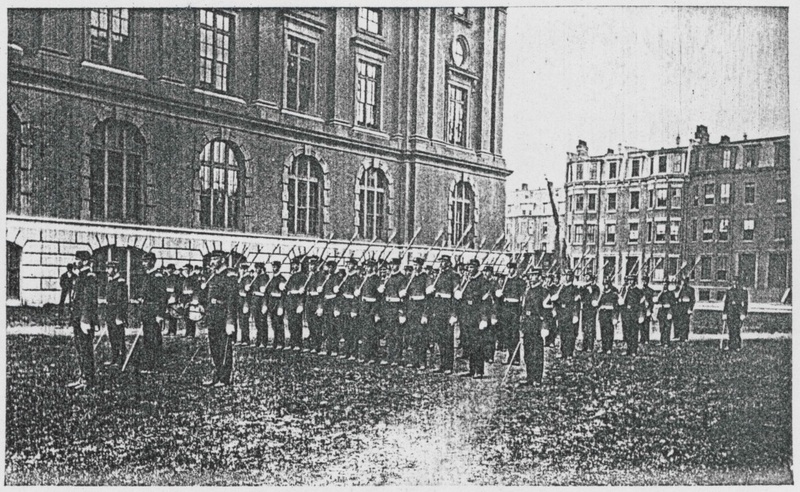
These restrictions shaped MIT’s student identity in crucial ways. MIT’s status as a land grant university meant that it was required to provide students with a basic level of military training, including instruction in strategy and drill. The Freshman class was divided into two companies under the supervision of a US Army Lieutenant, and military discipline was considered an important social and moral aspect of the educational program, though it was never a popular part of the curriculum. With limited resources and stringent requirements Tech students were often bound by what they endured together, rather than the interests they shared.
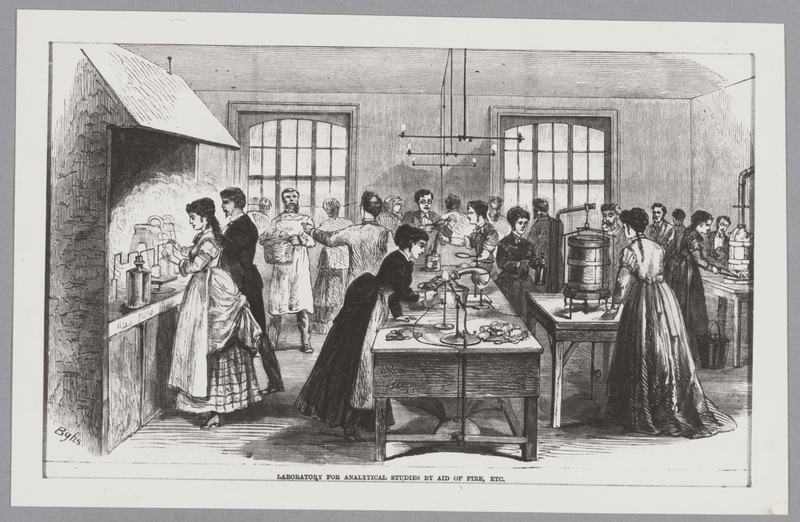
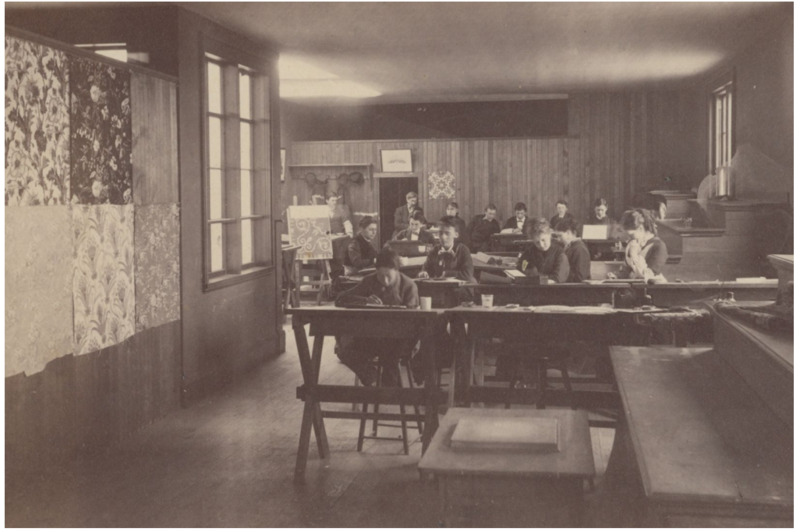
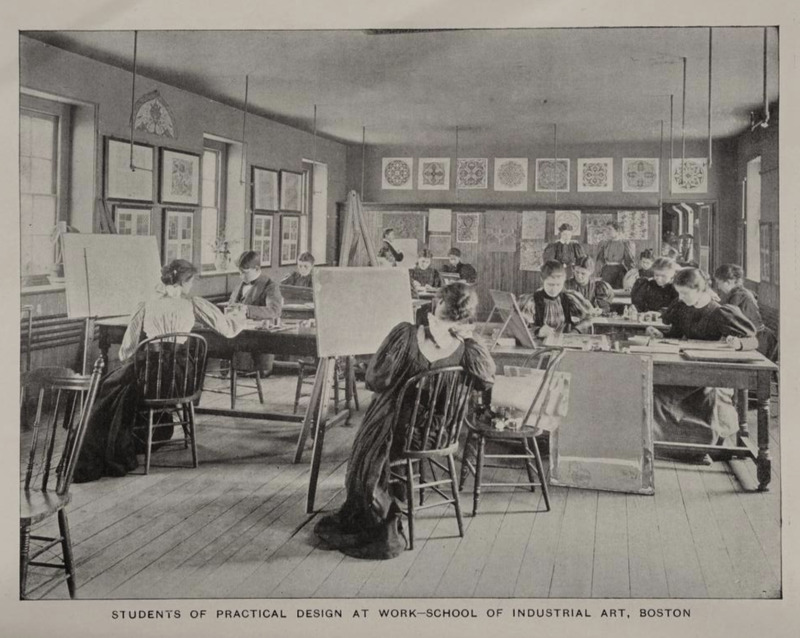
At the same time, MIT’s cooperation with the Lowell Institute both helped keep the lights on and expanded the image of just who exactly could be a student at Tech. While Ellen Swallow Richards, the first woman to graduate MIT with a bachelor’s degree did so in 1873, most women attending the Institute in the early days attended either as Special Students, non-degree seeking students who enrolled in specific fields of study or who took whatever courses were of interest to them in a semester, or as students in the Lowell School of Practical Design (sometimes called the Lowell School of Industrial Art).
Tied to William Barton Rogers’ original mission of “the triple organization of a Society of Arts, a Museum or Conservatory of Arts and a School of Industrial Science and Art” (MIT Charter) and founded in 1873, the Lowell School provided professional training for technical drawing and graphic design. Many of these students went on to do design work for the industrial textile mills in New England.
The course catalog for 1875-1876 lists 12 women students, all enrolled at the Lowell School. During the 1876-1877 school year, MIT listed two women as first year special students - Susan H. Bowditch and Emily Johnson (who studied mechanical and freehand drawing), 14 women as Special Students in Chemistry, and 38 women as Students in Practical Design.
Although the Lowell School was eventually separated from MIT and incorporated into the Massachusetts School of Design at the Museum of Fine Arts, the tradition of an inclusive and accessible education is one that lives on at MIT to this day through initiatives such as MIT OpenCourseWare.